1. Which Building Department Will Pull My Permit, and Have You Worked With Them?
Most buyers interview builders the way they’d interview a contractor for a deck. Price, timeline, licensed and insured, and then they go with whoever sounded most sure of themselves. Sounding sure is easy, and it is worth almost nothing on a project that runs eight to ten months.
The ten questions below are harder to answer well. They are also the ones that separate a builder who will protect your money from one who will spend a year of it finding out what your land actually required.
This sounds like paperwork. In Southwest Ohio it is a real test of local knowledge.
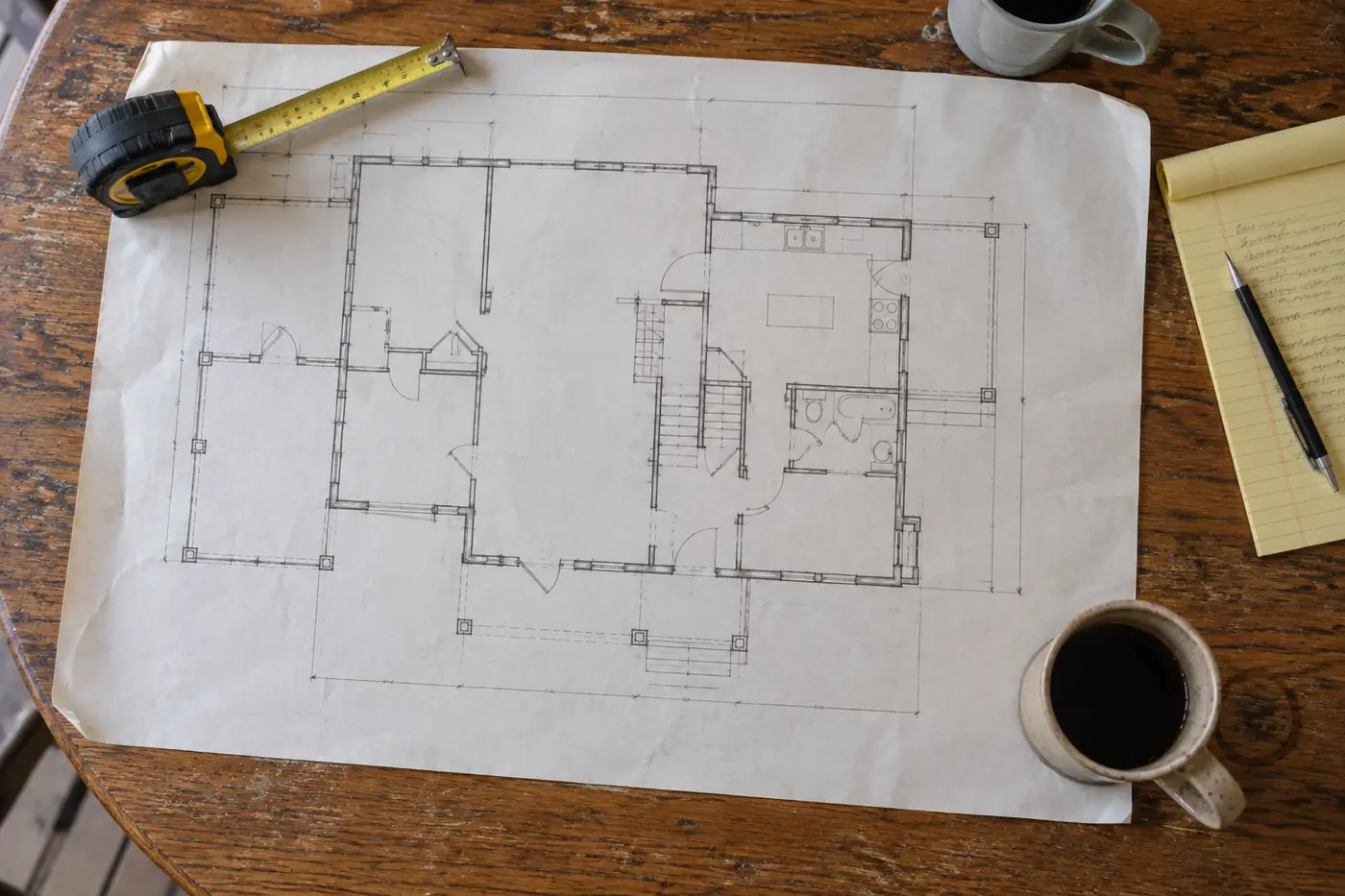
Warren County alone has multiple certified residential building departments. The county department in Lebanon covers much of the unincorporated county and several villages, while Springboro, Mason, Franklin, Monroe, Carlisle, and Middletown run their own. The City of Lebanon issues zoning permits but sends building inspection to the county. Zoning is handled township by township, so Deerfield Township runs its own and requires a zoning certificate before the county sees your file, while Turtlecreek uses the county for both.
Clinton County, Preble County, Greene, Montgomery, and Butler each have their own arrangement again.
A builder who has worked your parcel’s jurisdiction knows the sequence, the review timeline, and the person who answers the phone. A builder who has not will learn it on your schedule.
2. When Do You Evaluate My Site, Before or After You Give Me a Budget?
Make this the second question, because the answer tells you almost everything.
Site conditions move a project budget more than almost any other variable, and none of them are visible in a listing. Soil type drives the foundation approach. A perched seasonal water table, which is common across this region’s glacial till soils, drives both the foundation and the septic design. Distance to the nearest electric line, driveway length, clearing scope, and whether the parcel needs a well all compound from there.
A builder who sets a number before walking the land is either guessing or giving you a low number to win the job. Both end in the same conversation four months later.
ACE evaluates the site before setting a budget. That order is not a courtesy, it is the only way the number means anything.
3. Who Performs the Soil Evaluation, and Is It in the Contract?
Ohio’s household sewage rules run on a soil evaluation performed by a certified soil evaluator under Ohio Administrative Code 3701-29-07, not the percolation test most people still name. The evaluator describes the actual soil profile, and a registered designer builds the system around what the profile supports.
Ask who arranges it, who pays for it, and what happens if the result comes back requiring a more expensive engineered system. A builder who has an answer ready has been here before. A builder who treats it as your problem to sort out has told you how the rest of the project will go.
4. Are These Allowances or Placeholders? Show Me What’s Behind Them.
Every custom home budget contains allowances for finishes not yet selected. That is normal. What is not normal is an allowance set low enough to make the bottom line attractive.
Ask for the reasoning behind each one. What kitchen does this allowance actually buy? What flooring, over how many square feet, at what grade? If the answer is vague, the allowance is a placeholder and the difference will come out of your pocket as a change order.
Ask about the contingency reserve too, and be skeptical of anyone who says you do not need one.
5. Who Will Be on My Job, and How Often?
There is a large gap between a builder who visits weekly and one who is on site.
Ask who supervises daily, who you call when something is wrong, and whether the person sitting across from you in this meeting will still be involved in month seven. Many builders hand you to a project manager after the contract is signed. That is a legitimate way to run a company, but you should know it going in rather than finding out at the framing stage.
At ACE, Jon Snyder is on every project from first consultation through final walkthrough. The person you talk to in the first meeting is the person who builds your home.
6. What Exactly Does the Warranty Cover, and for How Long?
"One-year warranty" is not one thing. Ask for the tiers in writing.
ACE’s coverage runs one year on workmanship, two years on mechanical systems, and ten years on structural defects. Whatever a builder’s terms are, you want them written down before you sign, along with who you call in year three and whether that number will still be answered.
Ask how long the company has been in business under its current name, too. A ten-year structural warranty is only as good as the company standing behind it.
7. How Do Change Orders Work?
Changes happen on every custom build. What varies is how they are handled.
Ask how a change is priced, whether you see the cost before approving it, how it is documented, and what it does to the schedule. Ask what a change order costs in time, not only in dollars, because a cabinet change late in the process can idle a jobsite for weeks.
8. Can I See a Current Jobsite, Not Just a Finished House?
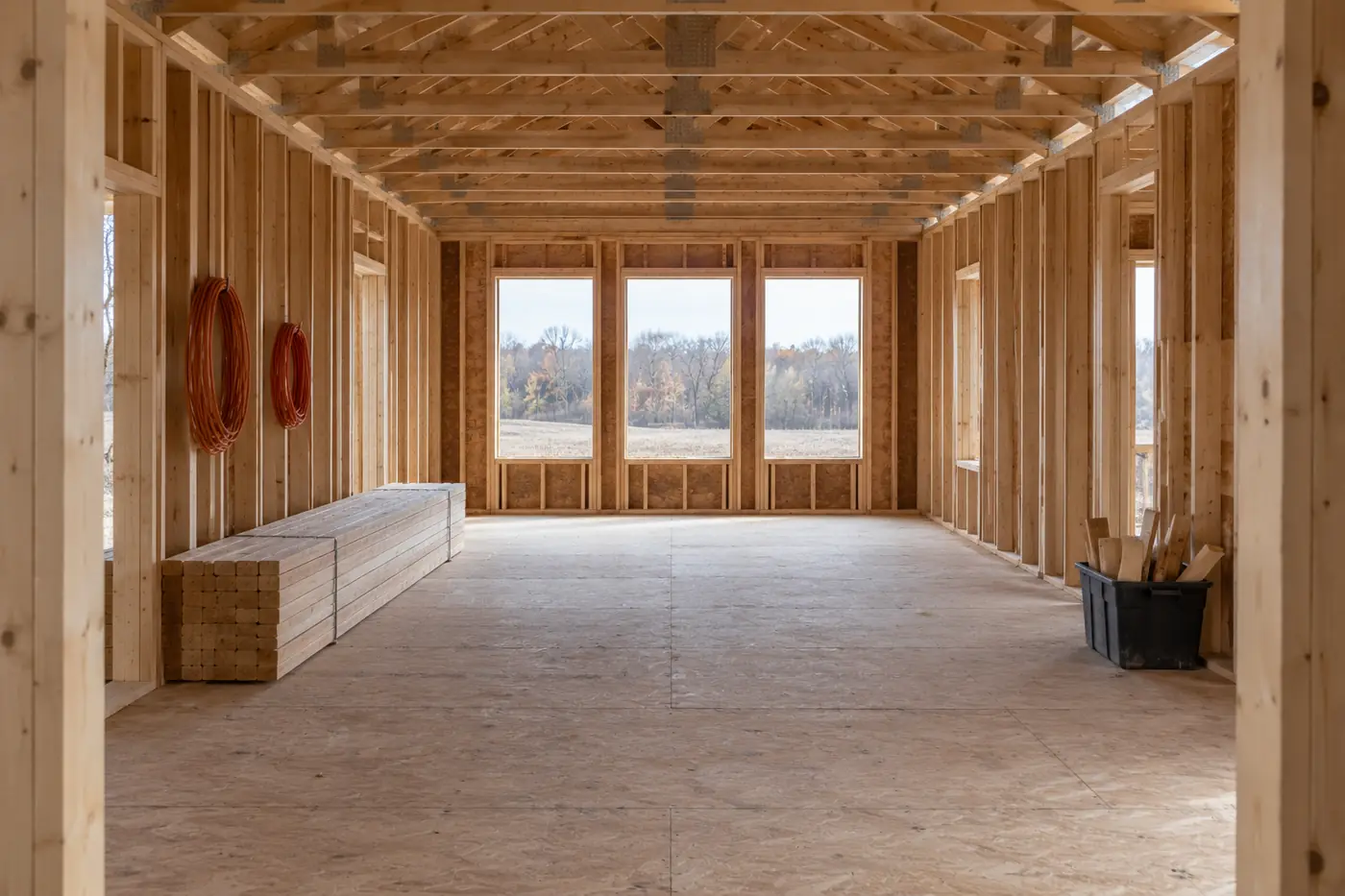
Anyone can show you a photographed kitchen. Ask to walk a house that is framed or in mid-finish.
You are looking for order rather than perfection. Is the site organized? Is material protected from weather? Is the framing clean in places nobody was ever going to look at? Is there a portable toilet and a dumpster, or is the neighbor’s ditch doing that job? Habits show up on a jobsite before they show up in a finished house.
9. Who Are Your Subcontractors, and How Long Have You Used Them?
A custom home is built by the excavator, the concrete crew, the framers, the plumber, the electrician, the HVAC contractor, and the finish trades. The builder coordinates them.
Several of those roles are separately regulated in Ohio, which narrows the field more than people expect. A septic system has to be installed by an installer registered with the health district, and inspected before backfill. A private well has to be drilled by a water system contractor registered with the Ohio Department of Health. The soil evaluator and the system designer are two more distinct credentials.
Long relationships with those trades are worth more here than they look. They determine whether your project gets a crew in a busy season, and whether the septic installer, the well driller, and the excavator have worked the same townships together before. Ask how long the core trades have been with the builder, and ask whether they are local.
10. What Does the Contract Say About Schedule?
Ask for the expected timeline in writing, and ask what is excluded from it.
Some of the longest lead items are not in the builder’s hands at all. A utility’s new-construction queue commonly runs months from application, before anyone trenches. Health district review, access permits, and cabinet lead times sit on their own clocks. Weather closes part of the year: the National Weather Service office in Wilmington puts the region’s last spring freeze around mid-April and the first fall freeze in the second half of October, with wide tails on both ends.
A good builder will not promise that none of this touches you. They will tell you which items are on the critical path and what they are doing this month to start them.
Red Flags Worth Walking Away From
Watch for any of these:
- A confident price before anyone has walked your land
- A per-square-foot number presented as a budget
- Reluctance to put warranty terms in writing
- No current jobsite available to visit
- A contract put in front of you at the first meeting
- Visible irritation at these ten questions
That last one is the most useful signal in the list. You are about to write the largest check of your life, and a builder who resents being asked how they work has told you how the next ten months will feel.
Common Questions About Choosing a Builder
How many builders should I interview?
Three is a reasonable number. Fewer than that and you have no basis for comparison. More than that and the conversations blur together. Ask all of them the same questions and write the answers down the same day. ACE’s Ohio Custom Home Buyer’s Guide has a longer list if you want more to work from.
How do I compare bids that aren’t structured the same way?
Usually you cannot, and that is the finding. Ask each builder to break the budget into the same components: land, site preparation, construction, soft costs, and contingency. If one bid is missing site prep entirely, it is not lower, it is incomplete.
Should I have plans before I talk to a builder?
Not necessarily. Plans drawn without knowledge of your site often need reworking once the soil evaluation and setbacks are known. A conversation first usually saves a redraw.
What credentials actually matter in Ohio?
Verify standing independently: BBB accreditation, Home Builders Association membership, third-party reviews, and references from clients who finished more than a year ago. ACE has been building in Southwest Ohio since 1985, is BBB A+ accredited, and belongs to the Dayton and Cincinnati home builder associations.
Is it a problem if a builder says no to my lot?
It is the opposite. A builder willing to tell you a parcel is a bad idea is the one worth calling about the next one.